Everyday spending in Rwanda is in Rwandan francs (RWF), while park permits and many lodges are priced in US dollars. In late October 2026 the mid-market rate was roughly 1,470 francs to the US dollar. If you hold Rwandan notes from an earlier trip, check them first: several older issues are being withdrawn, and the deadline for exchanging them at ordinary banks has already passed.
Older banknotes are being withdrawn in 2026–2027
The National Bank of Rwanda (BNR) announced in March 2026 that these issues will stop being legal tender:
| Denomination | Issues being withdrawn |
|---|---|
| RWF 500 | Issued 1 July 2004 and 1 January 2013 |
| RWF 1,000 | Issued 1 July 2004 and 1 May 2015 |
| RWF 2,000 | Issued 31 October 2007 |
| RWF 5,000 | Issued 1 April 2004 and 1 February 2009 |
The key dates are:
- 2 March – 1 November 2026: the notes could be exchanged at commercial banks and Umwalimu SACCO. This window has now closed.
- Until 1 March 2027: the notes can still be exchanged, but only at the BNR head office in Kiyovu, Kigali, or a BNR branch.
- From 2 March 2027: the notes stop being legal tender and will not be accepted as payment.
The issue date is printed on each note, and the announcement’s annex shows the features of each withdrawn design. In practice, newer 2,000 and 5,000 franc notes issued from September 2024 are not affected. Check the date on every note you receive in change. Rwanda has no 10,000 franc banknote; BNR has warned that notes of that value are fake.
Exchange rates and where to change money
The rate moves daily. For reference, it was about 1,455–1,465 francs per dollar in February 2026 and around 1,475 by the end of October 2026. Check the rate on the day you exchange rather than relying on any article.
- Banks and licensed forex bureaus in Kigali and the main towns are the safe places to exchange cash. Ask for the final franc amount after any commission, count it at the counter and keep the receipt.
- Bring clean, recent US dollar or euro notes. Older, torn or marked notes may be refused or given a worse rate.
- Avoid street money changers. Unlicensed exchange is illegal and a common source of short-changing and fake notes.
- Exchange enough before leaving Kigali for remote areas such as Nyungwe, Akagera or a Lake Kivu village, where options are fewer.
Cards, ATMs and mobile money
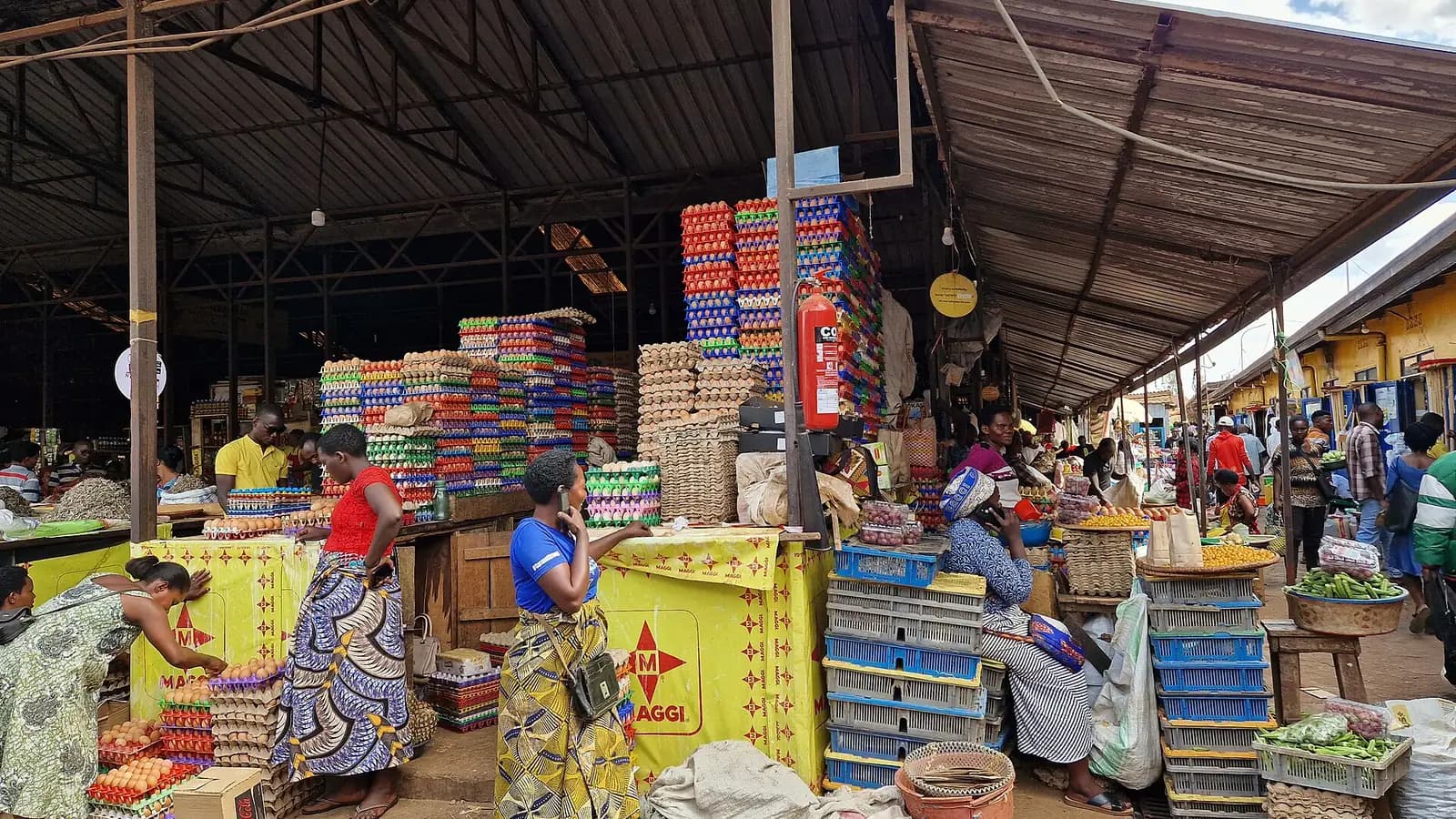
- Cards: many hotels, larger restaurants, supermarkets and tour offices in Kigali take Visa and Mastercard; American Express is accepted less often. Ask before you order or book. Small shops, markets and moto-taxis expect cash or mobile money.
- Currency choice at the terminal: if a card machine offers to charge you in your home currency, choose francs. The “convenience” conversion usually costs more.
- ATMs: bank ATMs in Kigali and the main towns accept international cards. Your own bank may add fees, so tell it before you travel and check its withdrawal limit.
- Mobile money: MTN MoMo and Airtel Money are widely used for everyday payments. Visitors usually need to register a local SIM with their passport at an official shop before activating a wallet. Never share your PIN with anyone offering help.
What things cost: official prices in 2026
| Item | Official price for foreign visitors | Source |
|---|---|---|
| Gorilla tracking permit | US$1,500 | RDB permit portal |
| Golden monkey tracking | US$100 | RDB permit portal |
| Musanze Caves | US$50 | RDB permit portal |
| Nyungwe park entry, 1 night | US$100 | Nyungwe pricing 2025–2026 |
| Nyungwe chimpanzee tracking | US$150 | Nyungwe pricing 2025–2026 |
| Nyungwe canopy walk | US$40 | Nyungwe pricing 2025–2026 |
| Akagera entry, 1 day or night | US$100 | Akagera price list 2025 |
| Kigali Genocide Memorial | Free (optional audio guide extra) | Kigali Genocide Memorial |
| King’s Palace Museum, Nyanza | RWF 20,000 | Rwanda Cultural Heritage Academy |
| Ethnographic Museum, Huye | RWF 15,000 | Rwanda Cultural Heritage Academy |
Details and links are in our safari and outdoor guide and historical places guide. Permits are bought online through the RDB portal or a licensed tour operator, not in cash at the park.
Practical money tips
- Keep smaller notes (1,000–5,000 francs) for moto-taxis, markets, tips and bottled water.
- Split cash and cards between your daypack and your accommodation safe.
- Confirm in writing whether a tour or lodge quote includes park fees, guides, transfers and meals.
- Tipping is appreciated but not compulsory. Guides, porters and drivers are commonly tipped in francs or dollars at the end of an activity.
- Before departure, spend or exchange leftover francs. Outside the region, banks rarely buy them back.
Entry permission is separate
Paying for a tour does not settle your entry to Rwanda. Rwanda offers visa on arrival to all nationalities, and a standard single-entry tourist visa costs US$50 for 30 days unless your passport qualifies for a waiver. Check the visa-on-arrival guide and your passport guide.
Checked on 4 November 2026 against the BNR announcement, RDB permit portal, Nyungwe and Akagera price lists, Kigali Genocide Memorial and Rwanda Cultural Heritage Academy. Exchange rates are approximate mid-market references.