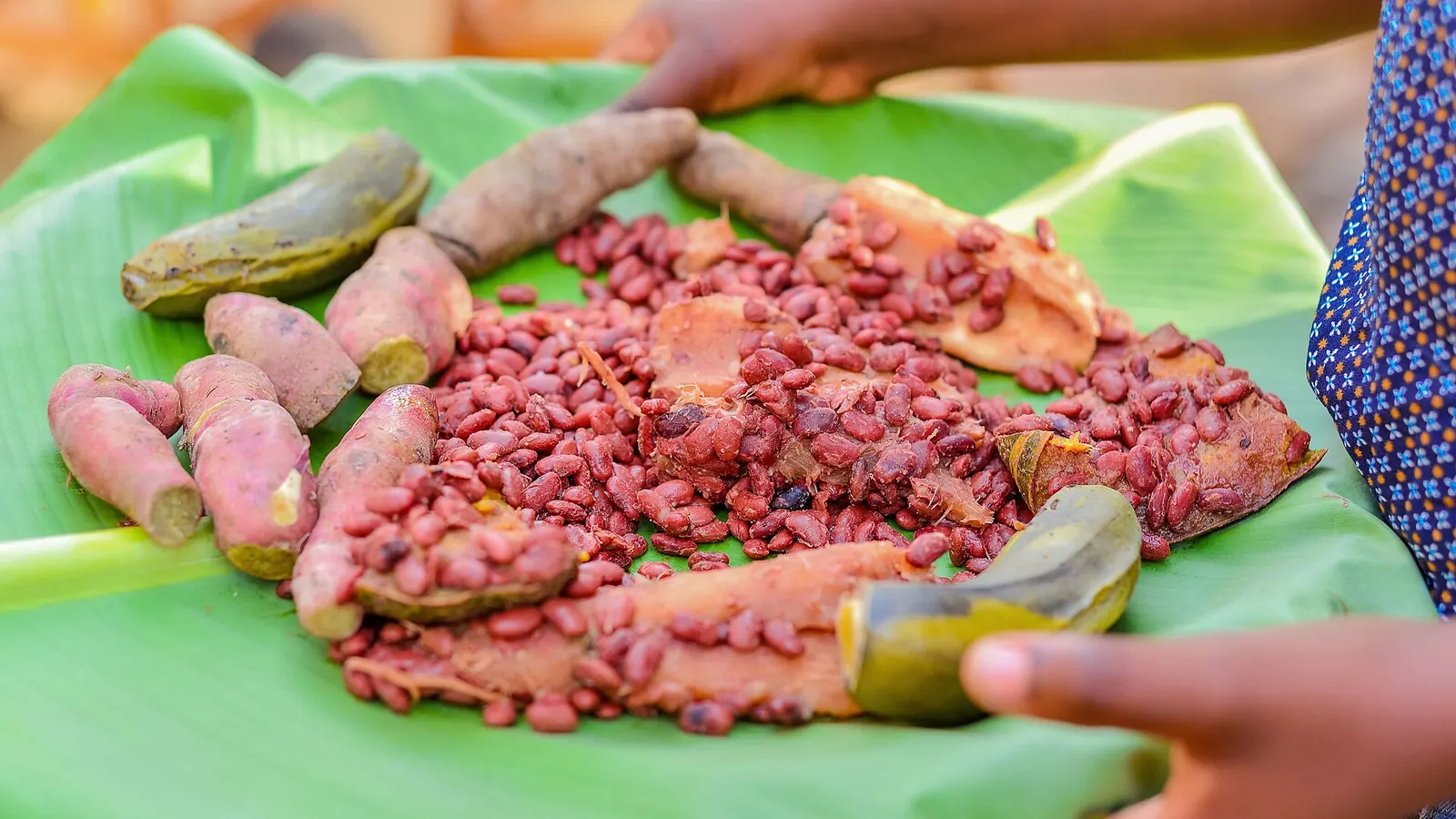
Rwandan food is simple, seasonal and built on what grows on the country’s farmed hills: beans, cooking bananas, sweet potatoes, cassava and greens. Meat, especially grilled goat brochettes, is popular when eating out, and fish from Lake Kivu is a highlight in the west. Many dishes are found across the country; region mostly changes what is fresh and what the local speciality is.
Dishes to know
UN Tourism’s gastronomy guide to Rwanda introduces several of these staples:
| Dish | What it is |
|---|---|
| Isombe | Pounded cassava leaves, slow-cooked, often with peanut paste or aubergine |
| Ubugali (ugali) | A firm dough of cassava or maize flour, eaten with stews and sauces |
| Ibitoke / matoke | Green cooking bananas, boiled or stewed |
| Agatogo | A stew of cooking bananas, often with meat or vegetables |
| Ibishyimbo | Beans, the everyday protein at many Rwandan meals |
| Brochettes | Grilled skewers, usually goat, served with chips or grilled plantain |
| Sambaza | Small fish from Lake Kivu, typically fried whole |
| Ibirayi | Potatoes, especially common in the cool north-west |
Many local restaurants serve a lunchtime buffet: one plate filled from a spread of beans, rice, matoke, potatoes, greens and stew. It is the easiest way to try several staples at once.
Kigali: markets, buffets and brochettes
- Kimironko Market, one of Kigali’s largest, sells fruit, vegetables, beans, spices and fabric. Visit in the morning for the freshest produce, and ask before photographing stallholders.
- Lunch buffets are widespread in the city centre and residential neighbourhoods. They are good value and a quick introduction to everyday food.
- Evening brochettes with a cold drink are a Kigali social ritual. Ask what the skewers are, as goat, beef, fish and liver are all common.
- Coffee: Rwanda is known for its specialty Arabica coffee, and Kigali has many cafes serving local beans. A cafe tasting in the city is different from a farm or washing-station visit, which needs to be arranged in advance.
Lake Kivu: sambaza and fresh fish
Along the lake in Rubavu, Karongi and Rusizi, look for sambaza, small fish usually fried whole and eaten with a squeeze of lime, as well as grilled tilapia. Lakeside restaurants are relaxed places to eat at sunset. Our Lake Kivu guide compares the three towns.
The north and Nyungwe: highland food, tea and coffee
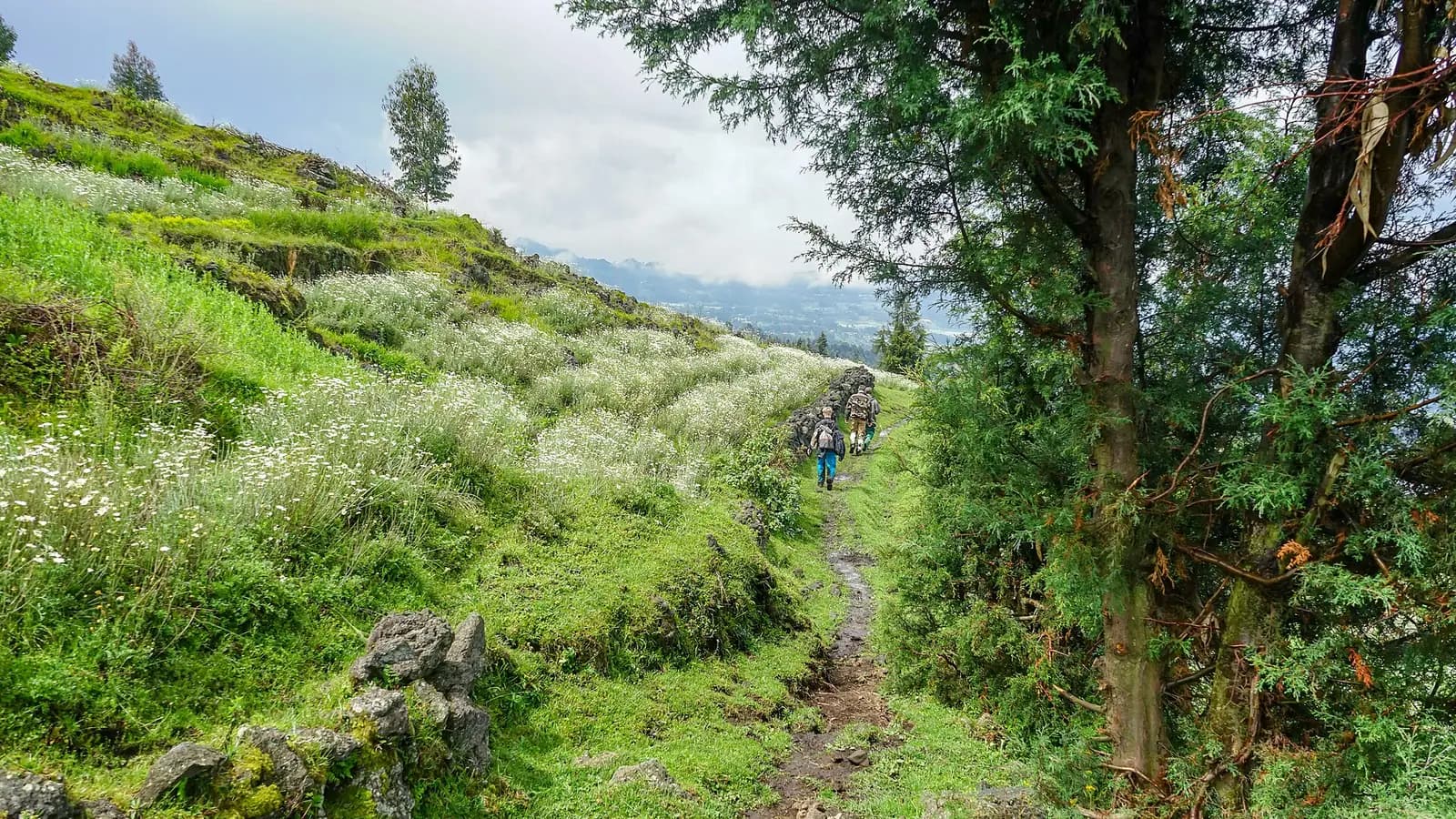
The volcanic soil around Musanze grows potatoes, so ibirayi feature heavily in meals near Volcanoes National Park. If you are tracking gorillas or chimpanzees, ask your lodge the night before for an early breakfast and a packed lunch: treks start early and can last several hours.
Around Nyungwe, the hills are covered with tea estates. UN Tourism highlights Rwanda’s tea and coffee culture; if you want to visit a plantation or factory, book it ahead through your lodge or a tour operator. A roadside view does not mean the estate is open to visitors.
Drinks
- Ikivuguto: fermented milk, thick and slightly sour, traditionally important in Rwandan culture.
- Urwagwa: traditional banana beer, served at celebrations and in some local bars.
- Tea: often served sweet and milky, sometimes spiced with ginger (icyayi).
- Bottled lager and soft drinks are available everywhere.
- Water: drink bottled or treated water rather than tap water.
Etiquette and practical tips
- Greet first. A “Muraho” (hello) and “Murakoze” (thank you) are appreciated.
- Eating in public: eating while walking down the street is traditionally considered impolite. Sit down to eat snacks.
- Umuganda: on the last Saturday morning of each month, community work means many businesses open late. Plan a late breakfast or eat at your hotel.
- Plastic bags are banned in Rwanda. Carry a reusable bag for market shopping.
- Dietary needs: vegetarian food is easy to find, as beans and vegetables are staples. Ask how a dish is cooked, because stocks, meat and peanut paste can be added without being on the menu.
- Tipping around 10% at sit-down restaurants is appreciated but not compulsory. For cash and cards, see the money guide.
Entry permission is separate
Rwanda offers visa on arrival to all nationalities, and some passports qualify for a fee waiver. Check the visa-on-arrival guide and your passport guide before you travel.
Checked on 4 November 2026. Dish descriptions draw on the UN Tourism publication; restaurant names and prices are left out because they change often.